Get to know our brands





Get to know our brands

The first step in refining your procurement strategy is taking a hard look at your broadline food and beverage procurement programs. The products you procure through broadline distributors are often the lifeblood of your operations, including name-brand condiments and beverages, center-of-the-plate proteins, and most-used grains and sides.

Because many restaurant and eatery operators order heavily from their broadline distributors, this is a great area to begin your procurement optimization. Assessment should begin with reviewing your existing relationship with your distributor, identifying your highest-priority products, and analyzing your historic spend data. From there, you’ll have identified your areas of opportunity and growth.
That review is most useful when you connect purchasing data to day-to-day operating needs. A broadline strategy should account for more than total spend. Consider how ordering patterns, product availability, pricing consistency, and distributor service affect your teams across locations. Looking at those factors together can help you distinguish isolated purchasing issues from opportunities that warrant a broader change in strategy.
Who is your broadline distribution partner? Is it a company that you’ve partnered with for years and have strong ties to or a group you’re still getting used to? Either way, this is one of the more important partnerships in your procurement ecosystem. It’s important to take time to assess the ways in which you work together.
You can start with a simple list of questions:
These questions will help you identify where your partnership is strongest, and where there’s room to adjust your strategy.
The next step in identifying savings opportunities is to compare your spend across broadline products. This will help you identify which products you buy the most consistently and in the largest amounts. It will also help you gain insight into which products you pay the most for.
It’s also helpful to take note of which products you currently purchase through regional and local suppliers. Additionally, you can compare those purchases against the products available through your broadline distributor to understand where consolidation may make sense. Keep product specifications, menu importance, quality requirements, and operational flexibility in view as you compare options; the lowest-priced alternative is not always the best fit for the way your operation runs.
You can also assess if you’re over- or under-purchasing. You may have all the right products, but in the incorrect amounts.
One way to make the analysis more actionable is to group products by how much flexibility you have. Menu-critical or specification-sensitive items may require a different approach than products that can be substituted more easily. That segmentation helps you focus first on categories where purchasing changes can create value without introducing unnecessary operational disruption.
By now, you’re ready to start looking for your biggest opportunities for greater savings and efficiency within your broadline food and beverage procurement program. This is where you’ll want to run the numbers on how much you could be saving and identify your steps to getting there.
Start by establishing a baseline you can measure against. Review spend by category and location, look for meaningful variances, and compare purchasing patterns over time. From there, prioritize the opportunities that are both financially meaningful and operationally practical. This creates a more disciplined path from identifying an opportunity to deciding whether it belongs in your procurement plan.
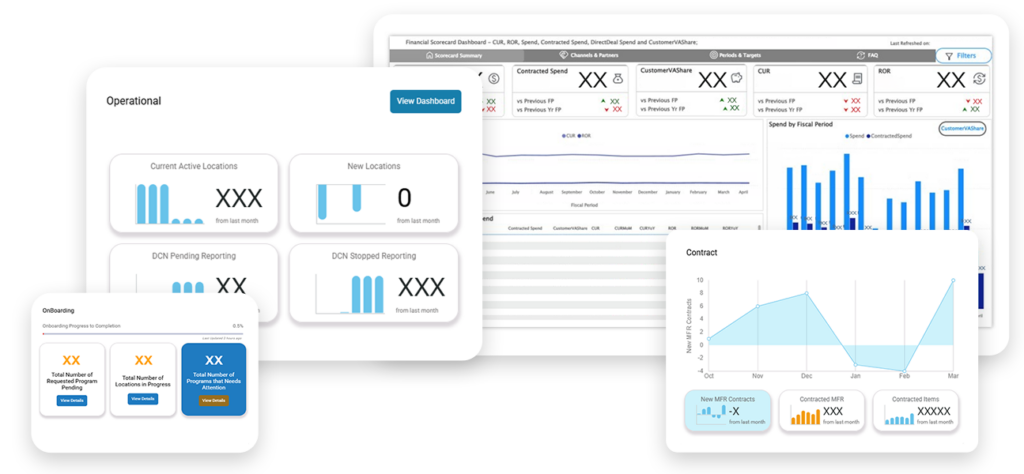
The easiest method is to use procurement technology to your advantage. Tools like MPower and iTrade Insights track location and overall spend, then slice and dice your data to help you understand your purchasing habits. Then, they can list out your top savings opportunities, making it easy to make switches with big impact.
Foodbuy Foodservice technology can help turn that analysis into a repeatable process. MPower brings spending reports, program information, industry updates, and Foodbuy support into one platform, giving Members greater visibility into purchasing activity. For Supply Chain Management Clients, iTrade Insights adds capabilities such as transaction-level spend visibility, distributor inventory insights, contract management, and product details. Using these tools alongside your procurement team can make it easier to spot patterns, validate priorities, and track progress as your strategy evolves.
Managing your broadline food and beverage procurement strategy can be complicated, but only if you’re going at it alone. With the right procurement partner, you can expand your purchasing team and leverage the resources of a greater group of supply chain experts.
The partnership also matters after the initial analysis. Procurement priorities shift as menus, locations, market conditions, and business goals change. Ongoing review helps keep the strategy connected to what your operation needs now, while giving your team a consistent process for evaluating new opportunities rather than reacting to purchasing challenges one at a time.
That’s the type of leg up that Foodbuy Foodservice offers to both our group purchasing Members and supply chain clients. Backed by a team 700+ supply chain experts, we offer pre-negotiated pricing and access to solutions that make purchasing easier and more effective. Reach out to our Business Development Team today to learn more about us.